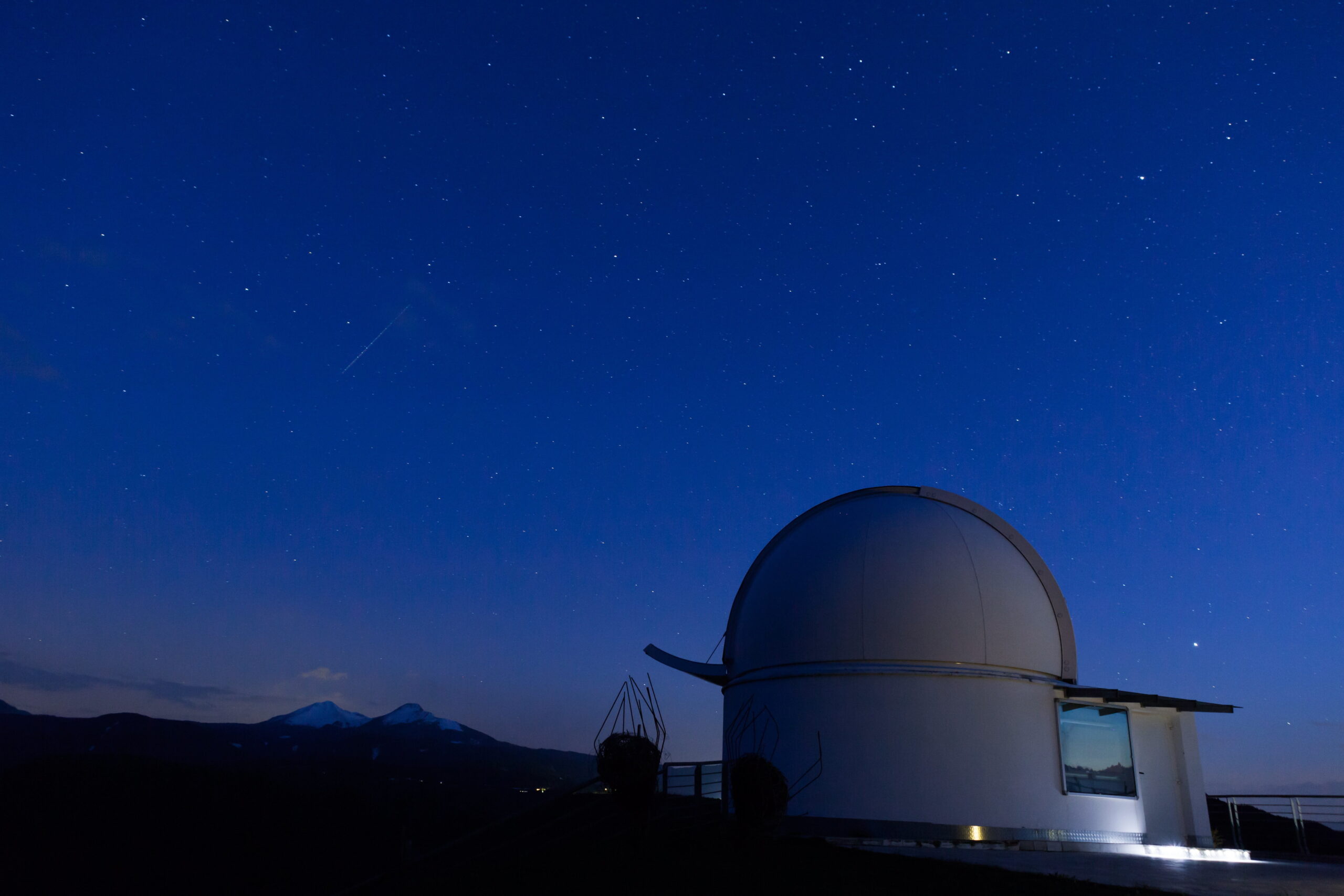
Hundreds of billions of measurements. That is the order of magnitude, according to Grantecan, of the data an artificial intelligence project is sifting to understand how the system that lets the Gran Telescopio Canarias follow the stars is ageing. The telescope, which works at the Roque de los Muchachos on La Palma, has won approval from the Spanish Supercomputing Network (RES) to carry the work forward.
The news was published on 28 October by elDiario.es, La Palma Ahora edition. It should be said up front that the information comes from posts Grantecan published on its own social media, and that we could not find a second independent source. Keep that in mind when reading the details.
The project was presented at the 20th RES user meeting (JURES26), held at CIEMAT in Madrid on 21 and 22 October. According to Grantecan it showed “la capacidad de detectar degradaciones históricas del sistema de seguimiento del GTC”, the ability to detect past degradation of the telescope’s tracking system, using statistical machine-learning and artificial intelligence techniques.
What is it for, in practice? That system has to keep a star in focus for hours. A sudden failure is noticed at once. A defect that builds up slowly is much harder to see, because each day looks like the one before. Catching it early would allow predictive maintenance, meaning action before the instrument loses precision or stops.
The data were uploaded and processed on the RES infrastructure at CESGA, in Santiago de Compostela: five years of history, with an enormous volume of measurements that needs a lot of storage and computing power. That the work is done at a national facility and not on a server at the telescope says something about the size of the problem.
What do we not know? Quite a lot. The source does not give the computing hours awarded, the budget, the timetable or any first concrete results, such as which components show wear. Caution is in order: an approval is not a result.
Why should this matter to someone living in the Canary Islands? Because it shows artificial intelligence applied to real island infrastructure, not to an announcement. Grantecan is one of the big telescopes at the Roque de los Muchachos and, like any complex instrument, it needs maintenance. If AI can say weeks ahead that a part is wearing out, the benefit is very concrete: fewer lost observing nights.
That is a reasonable hypothesis, but it remains a hypothesis, because the sources give no figures for avoided downtime. The next useful news will be whether Grantecan publishes results, and whether the method can be used on other instruments at the observatory. When it does, we will report it.