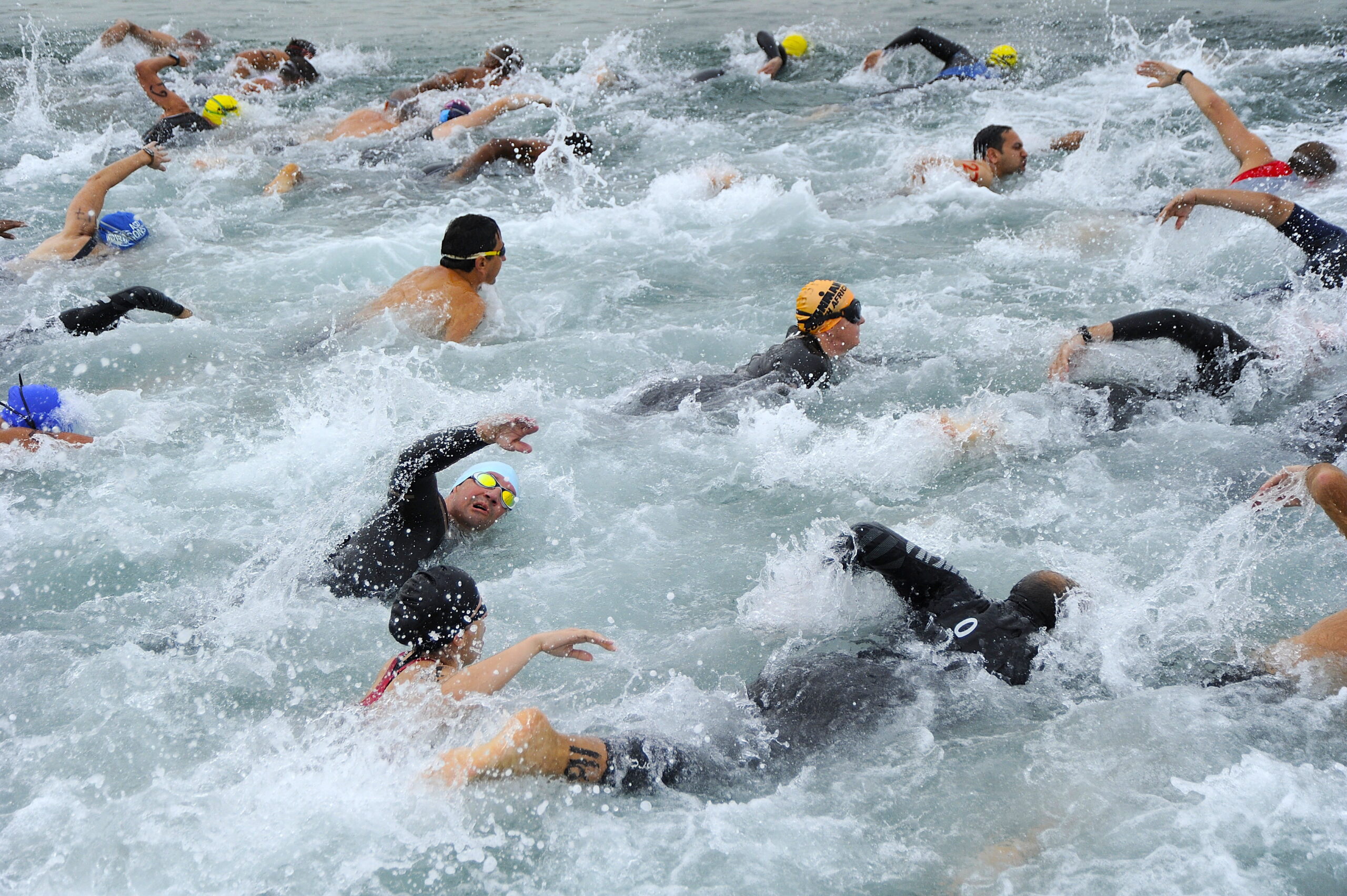
We know who won. We do not know what it cost or what it left behind. That sums up, for now, the balance of the European Triathlon Cup that filled Santa Cruz de Tenerife on Sunday 11 October.
Start with what can be checked. The race was sprint distance: 750 metres of swimming, 20 km on the bike and 5 km running, for men and women. Among the men, Germany’s Ortfeld won, Tenerife’s Chente Hernández took silver and Jarno Pousada bronze. Among the women, American Annie Fuller beat France’s Elena Polaert and fellow American Faith Duncan. Among the Spanish women, Cristina Jiménez Orta finished tenth and Andrea Trigo thirteenth. Alongside the European Cup, according to RTVC, the programme included Paralympic races, the Canary Islands championship and events for youth and amateurs.
It is the second time the island has hosted the stop. In 2025, when RTVC announced it as Tenerife’s first, the elite field numbered 138 athletes from more than 25 nationalities. The Spanish Triathlon Federation (FETRI) organised it, with support from the Cabildo de Tenerife through its public company Ideco, under an agreement signed in November 2024. For 2026 I found neither entry numbers nor the organisers named in the sources I consulted, and I prefer not to attribute 2025 data to this year.
Here comes the point that matters to people following the islands. In 2025, officials described this kind of event as an economic and tourism driver, and a chance to show the city’s organisational ability. Those are stock phrases, not figures. Neither the 2025 article nor Sunday’s gives an estimate of spending, overnight stays or visitors.
And the question is not minor. An elite race on a city circuit brings athletes, teams and families for several days, closes streets, engages volunteers and police, and gets an international television window. It costs public money. That is enough to ask for an accounting, and the request is not hostile: big events work better when residents know what they paid for.
Two things are worth watching over the coming weeks. One is whether the Cabildo or Santa Cruz city council publish attendance and return figures, as other island events have. In July, for instance, the Granca Live Fest reported a direct economic return of €33 million, according to Diario de Avisos. The other is whether the stop is confirmed for 2027, and on what terms.
I have no evidence that the race produced any particular impact, good or bad. I only know it was run, that it gave an international podium and a Tenerife name among the top three. And that someone, sooner or later, should show the bill.