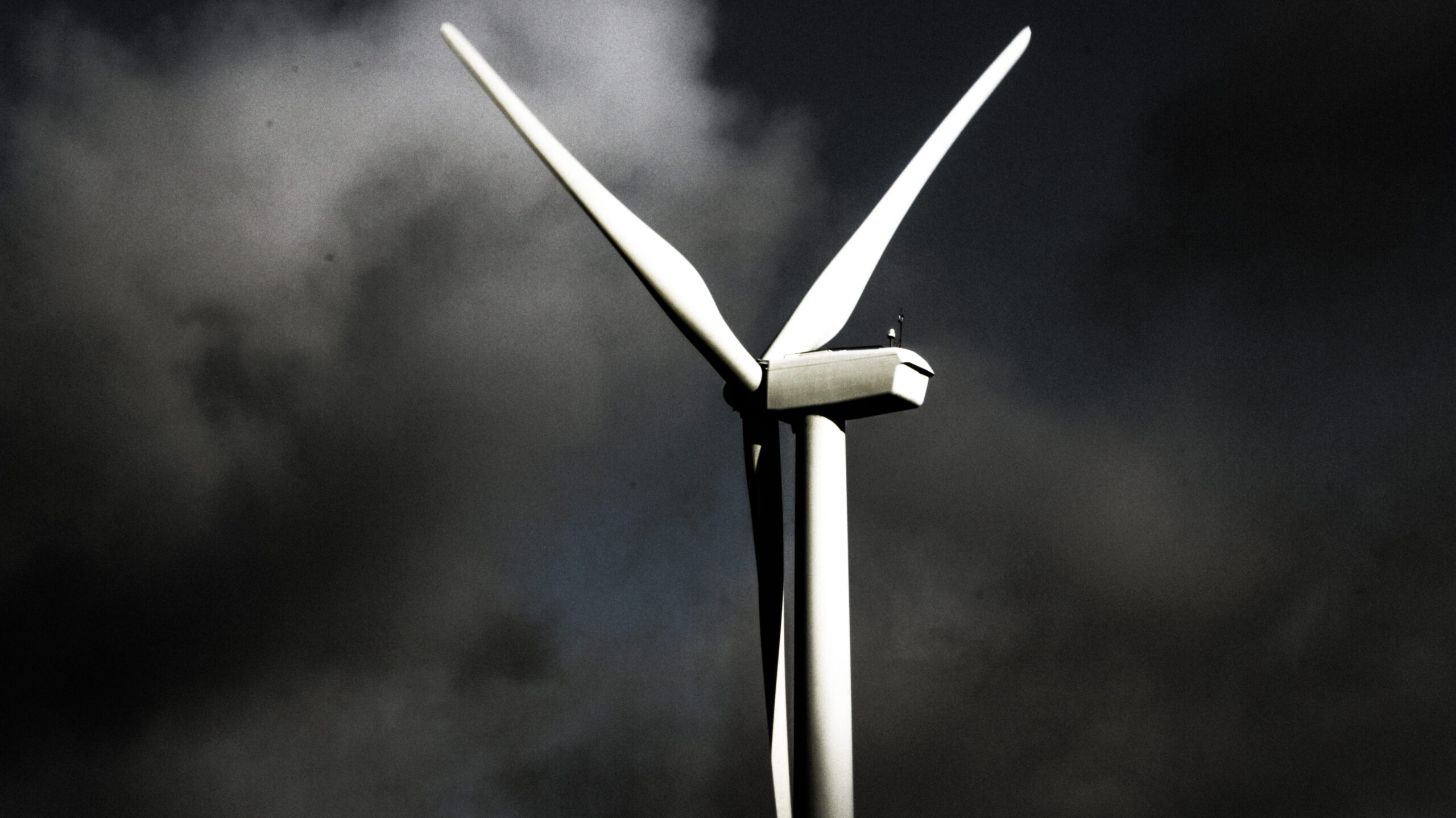
On Friday 9 October, Canary Islands president Fernando Clavijo went up to Los Llanos de Botija, in Gáldar on Gran Canaria, to watch a crane lift the structure of the third wind turbine. It had been unloaded at the Puerto de La Luz the week before. The blades were still missing.
Most stories about renewables in the Canaries are about big private plants. Botija is a different story. It is the first wind farm in the archipelago owned entirely by a municipality, and so far it generates with two turbines. The third, rated at 0.8 MW, will take installed capacity to 2.4 MW, going by the figures the authorities gave.
The total investment for this expansion is 1.88 million euros. The Canarian government, through the Ministry of Ecological Transition and Energy led by Mariano Hernández Zapata, is putting in 684,598 euros; Spain’s Ministry for the Ecological Transition and the Demographic Challenge adds 1.2 million. The contractor is Elecnor, with Rafael Peñate and María Herrera as project directors and designers.
One detail the official statement doesn’t explain. An RTVC report from November 2023 put the third turbine in 2024, funded almost entirely by the State. It’s October 2026 and the blades haven’t arrived. The sources we read don’t give reasons for the delay, and we won’t guess; the fair thing is to note that the announced schedule has slipped.
Why does it matter? In 2023 the Secretary of State for Energy, Sara Aagesen, called Gáldar the first municipality in the Canaries with a wind farm that is fully municipal-owned, and the two turbines already running covered the town’s public services. With the third, that report said, Gáldar would become entirely self-sufficient. That claim needs checking against production and consumption data, which we couldn’t find published.
Clavijo spoke of greater energy autonomy and held Gáldar up as an example of institutional cooperation. Mayor Teodoro Sosa called the lifting work complex. These are stock phrases, but behind them is a model other councils could look at: energy that stays on the public books instead of leaving town.
An open question remains for the smaller islands and small towns. How many have the wind, the land and the funds to do the same? And how much does it matter here that two levels of government covered nearly the whole bill?