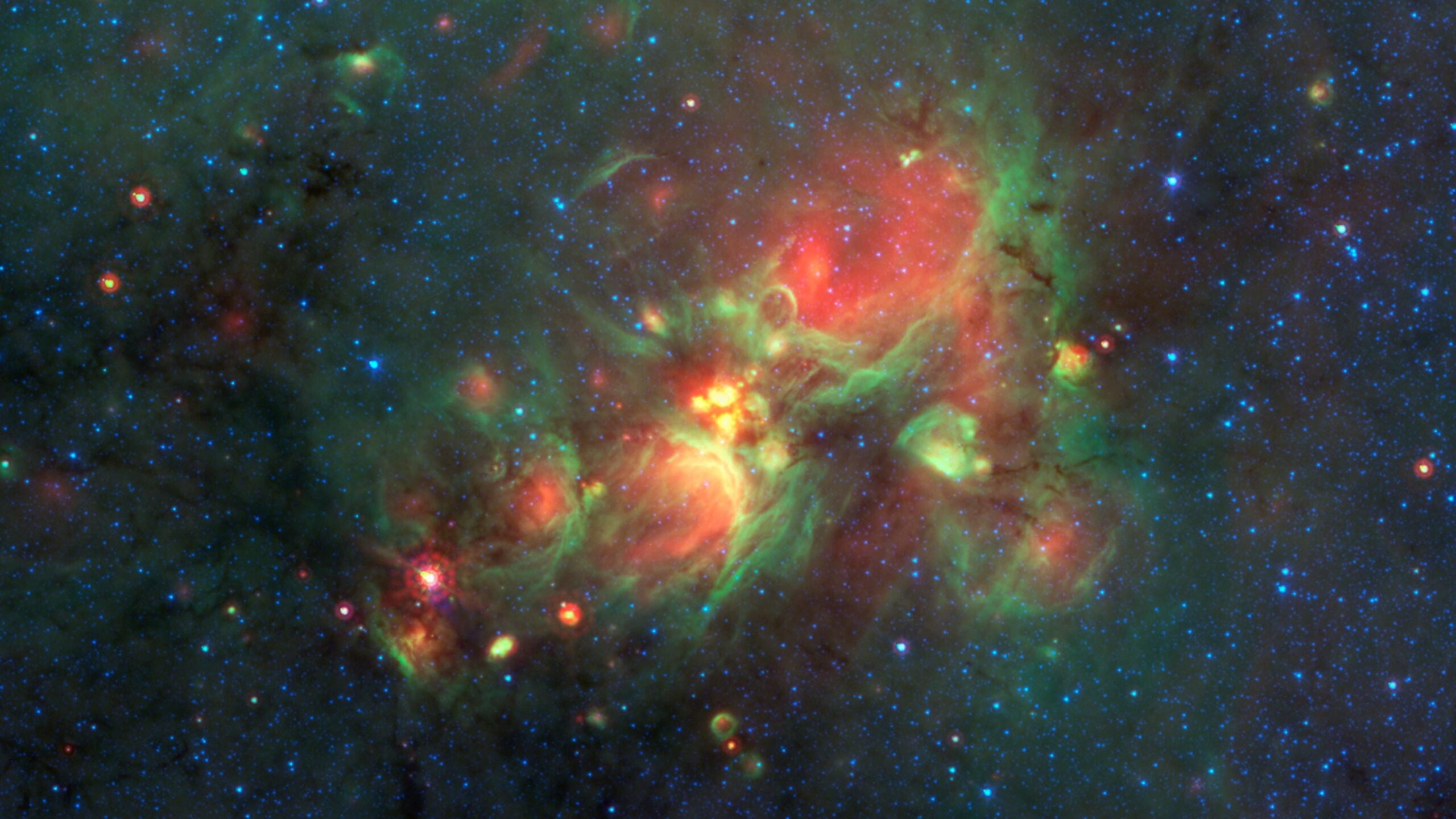
Massive stars are born with at least eight times the Sun’s mass, live short lives and die as supernovae, leaving black holes and neutron stars. They are the subject of the IAC’s 37th Canary Islands Winter School of Astrophysics, running from 16 to 27 November at the IACTEC building in La Laguna.
Just over 100 participants from about 20 countries attend, ten of them remotely, nearly half women. Spain, Argentina and Germany send the largest groups. The programme has ten lectures, six tutorials, a visit to the Teide Observatory on the 18th and an optional trip to La Palma’s Roque de los Muchachos on the 21st.
Three events are free and open to the public while seats last. On Tuesday 24 November at 17:30 at the Museo de la Ciencia y el Cosmos, Lanzarote-born ESO fellow Mar Carretero Castrillo talks about runaway stars. On Thursday 26 November at 17:30 participants present their research in a special “Del cielo a la tesis”, followed by Astronomy on Tap at El Búho in La Laguna from 19:00 to 21:00.
On 5 November the IAC published a study in Astronomy and Astrophysics, led by PhD student Carlos Martínez-Sebastián, on 45 binary systems with O-type stars. The most helium-rich stars orbit their companions in under 15 days, which points to material taken from the companion as the likely explanation for extra surface helium.