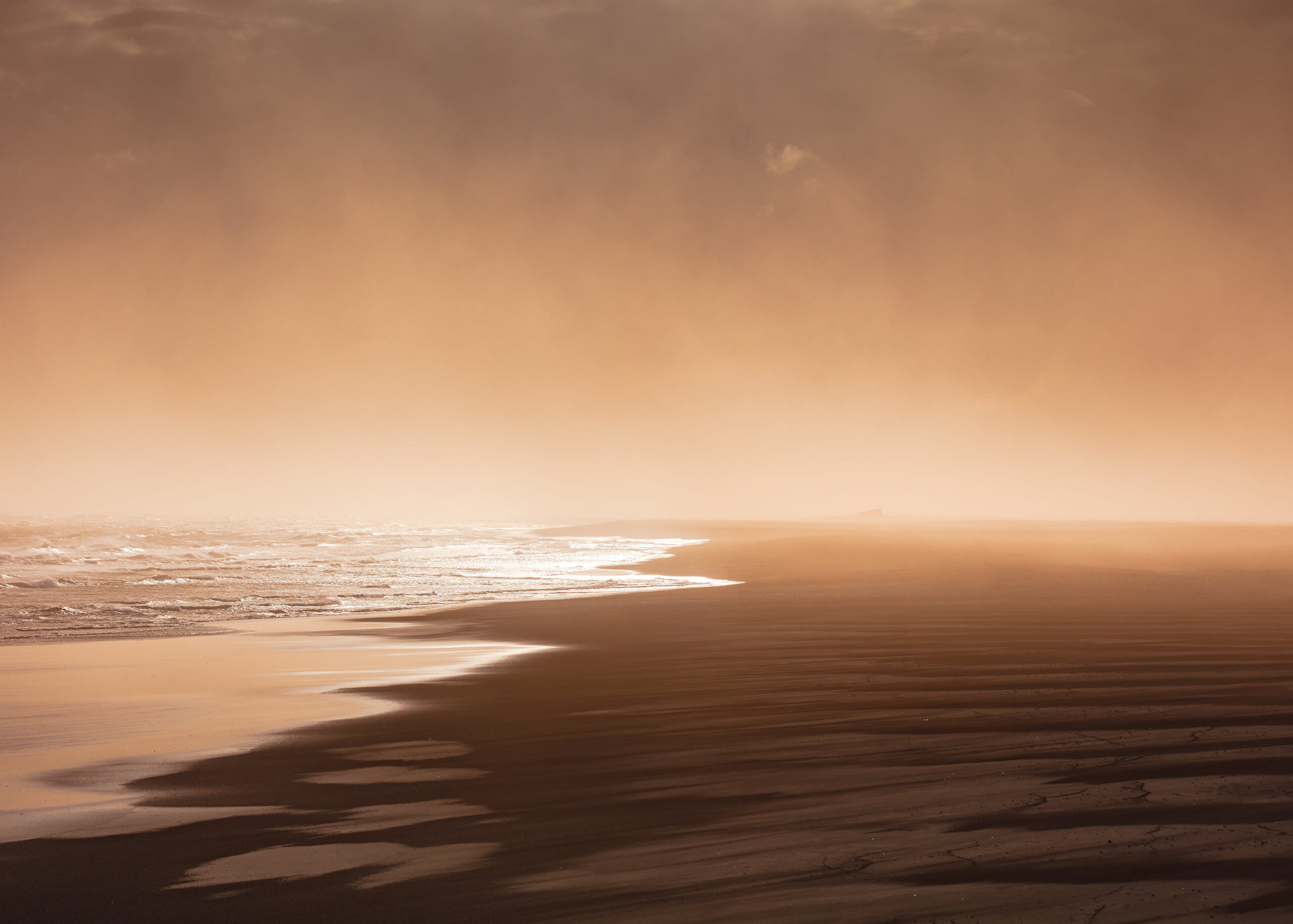
On Monday morning in Tenerife you could already see the dust with the naked eye: a yellowish film over the rooftops, while in Gran Canaria the thermometer was getting ready to flirt with 34 degrees. At 12:30 on 26 October, the Canary Islands Government declared a calima pre-alert for the whole archipelago. Today, Wednesday 28, is when the episode is expected to reach its height.
The declaration comes from the Dirección General de Emergencias under PEFMA, the regional plan for adverse weather, and relies on AEMET information. The figure worth remembering is 100 micrograms per cubic metre of suspended particles, the reference threshold named in the document. On Monday it could be exceeded in the mid-altitude zones and on south-facing summits of the mountainous islands, while in Fuerteventura and Lanzarote the dust stayed mostly aloft with little effect at ground level. On Tuesday, from midday, an increase at low levels on every island could not be ruled out. For Wednesday the Government expects the peak, with a possible widespread breach of 100.
Air quality had already worsened at many stations in Tenerife and Gran Canaria and at a few in La Palma. The health risk falls mainly on people with chronic or respiratory conditions, for whom calima can cause or aggravate symptoms. The statement points to self-protection advice published by the same directorate and does not list it, so it is better to read that advice at the source than to trust the lists doing the rounds on social media.
Then there is the heat. RTVC’s Monday forecast put Gran Canaria’s highs above the 32 degrees of previous days, up to 34, with the sharpest rises in the south and west of Tenerife, Gran Canaria, Lanzarote and Fuerteventura. The easterly wind was light to moderate on the coasts, while at altitude it blew from the west and south-west. On north- and east-facing coasts the swell could top 1.5 metres and, with the full moon, tides were running high. A few drops of rain were not ruled out on the high ground of La Palma and Tenerife.
It is not a one-off. RTVC headlines record calima pre-alerts in February, late March and early September this year, and anyone who has lived here a while knows the dust comes and goes with the season and the currents. Knowing what a pre-alert means still helps you plan the day, especially with small children, older relatives or asthmatics at home.
How long will it last? Neither the statement nor RTVC’s forecast gives an end date: the Government talks of continued monitoring and possible updates. If you work from home you may wonder whether to open the windows, but the sources consulted say nothing on that. The answer lies in the official advice from the Dirección General de Emergencias and, for anyone with a respiratory condition, in what their doctor says. What you can check yourself is the air-quality reading at the monitoring stations: if your island is one of those already affected, look at it before heading out for a run.